
October 29, 2026
5 mins

In our ‘Finishing your PGR’ session delivered to over 30 attendees earlier this month, a popular topic was our discussion of working with feedback – with a focus on shaping, receiving and addressing comments on draft outputs. Of course this could be adapted to many forms of writing – not just a PGR thesis or academic paper.
For a major project like a PGR thesis is it important to map out a schedule and set checkpoints for drafts of individual chapters and the thesis itself. It’s essential to discuss expectations about feedback (quantity, turnaround times, mechanisms like track changes etc.) and then review these at checkpoints along the way to see how the approach is working – both for the author and reviewer.
While its often a relief to send of a draft, try to remember to set up the reviewer for success!
- Format drafts to help the reader – ideally following the eventual required format
- Explain the status of the draft and where you are looking for feedback
- Remind the reviewer of the version of the document and any previous reviews
Sometimes this can be overwhelming. We suggest skim reading the review comments and then closing the document down for a few hours or a day. Then go back and assess common themes. Categorise different types of feedback especially that concerned with structure vs.content and plan how to address each. Ensure you understand whether feedback suggests you need to attend to the underlying knowledge base and may need to do further research. Perhaps most importantly ensure you clarify any feedback that is unclear or confusing - don't wait until you submit a later version. Finally ensure you have agreed when updates or a subsequent discussion is going to take place.
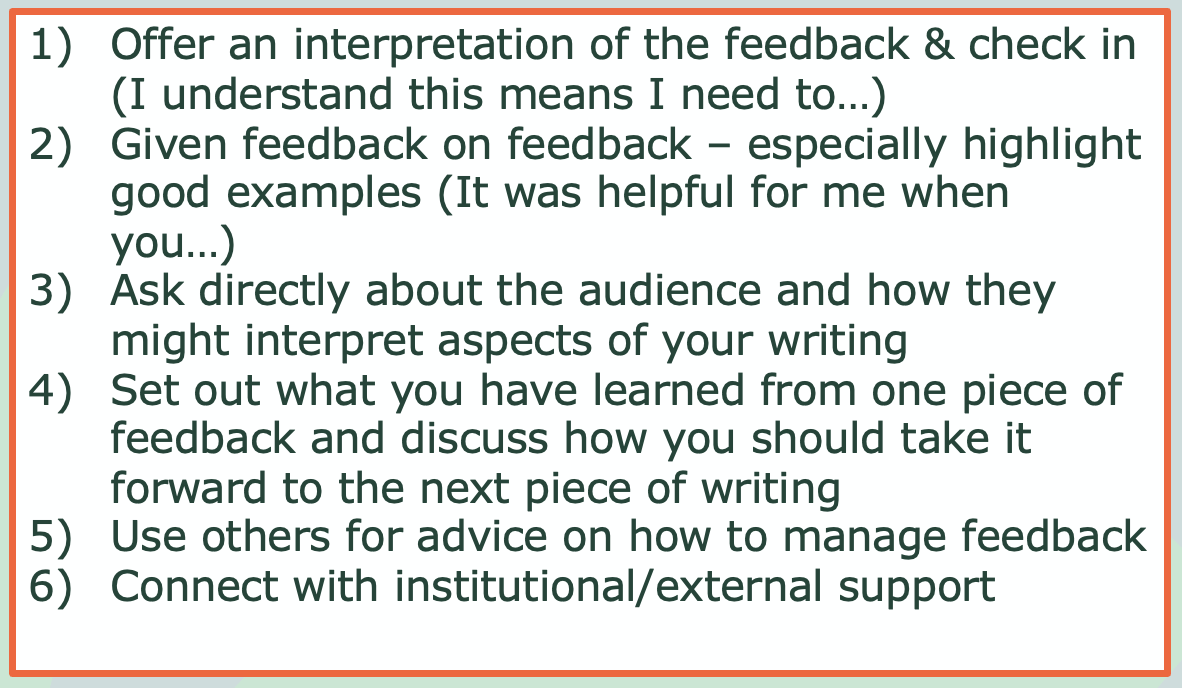
This is not uncommon! Providing clear and concise feedback on written drafts is a skill. The tactics below might help in addressingunclear feedback
Sign up today and we’ll email you with updates, events and more.
Research-led consultancy from two of the UK's leading organisational and qualitative research experts.